
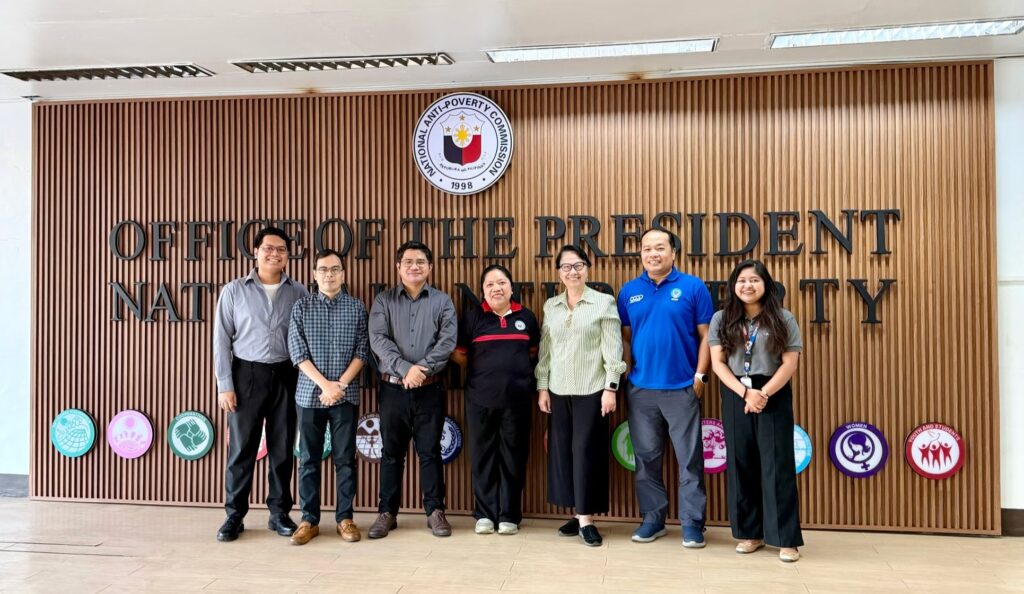
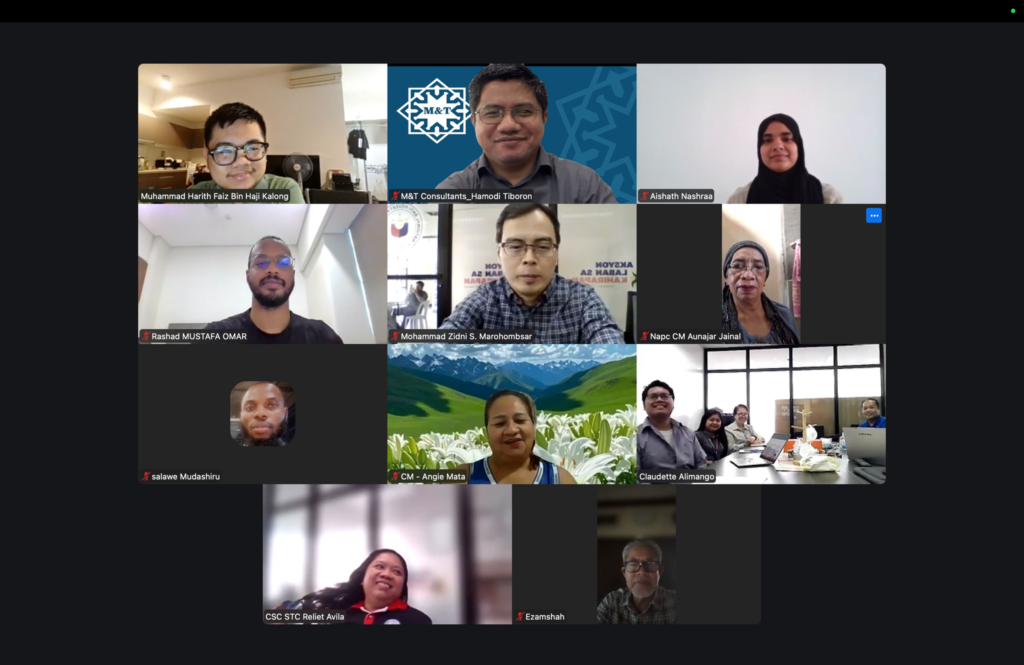
QUEZON CITY (April 7, 2026) – Following productive engagements earlier this year, M&T Consultants, Islamic Co. (M&T) and the National Anti-Poverty Commission (NAPC) held a follow-through meeting on April 7, 2026 at NAPC’s Central Office in Quezon City to further advance their strategic collaboration on Islamic Social Finance (ISF). The meeting highlighted the importance of inclusive and coordinated approaches to poverty reduction and the value of engaging a wider range of stakeholders such as cooperatives, non-government organizations, and partner institutions within NAPC’s network. The discussion reaffirmed NAPC’s role as a national platform for coordinating anti-poverty programs and convening stakeholders to explore practical and community-responsive solutions to social and economic vulnerability.
Discussions generally focused on strengthening the role of Islamic Social Finance as a complementary mechanism to existing national poverty reduction programs and development frameworks. The dialogue emphasized closer collaboration among institutions, improved alignment of programs, and practical ways to integrate community-driven and values-based approaches within established poverty reduction efforts. Participants also recognized the growing interest among communities and stakeholders in establishing and strengthening Islamic cooperatives as part of broader efforts to expand access to inclusive and culturally responsive financial services. The engagement also reflected the continued strengthening of M&T’s role in advancing Islamic finance in the Philippines, particularly in supporting partners in developing sustainable and scalable models that respond to the needs of underserved sectors. Opportunities for collaboration, knowledge sharing, and resource mobilization were likewise explored to support long-term impact and sustainability.
The meeting was also attended by representatives from the International Centre for Education in Islamic Finance (INCEIF) University, which works closely with M&T as its industry partner in the Philippines. Their participation forms part of ongoing Action-Based Learning initiatives focused on key areas such as zakat institutionalization and the development of zakat-linked Islamic microfinance for cooperatives, aimed at translating knowledge into practical, community-level solutions. This continuing engagement signals growing momentum toward institutionalizing Islamic Social Finance as a meaningful contributor to inclusive growth, community empowerment, and sustainable poverty reduction in the Philippines.