
COTABATO CITY, Philippines | August 19, 2026
RA 11439 at 7 Brings Together Philippine and Global Islamic Finance Leaders, Highlights Inclusion, Ecosystem Building and Global Professional Opportunities
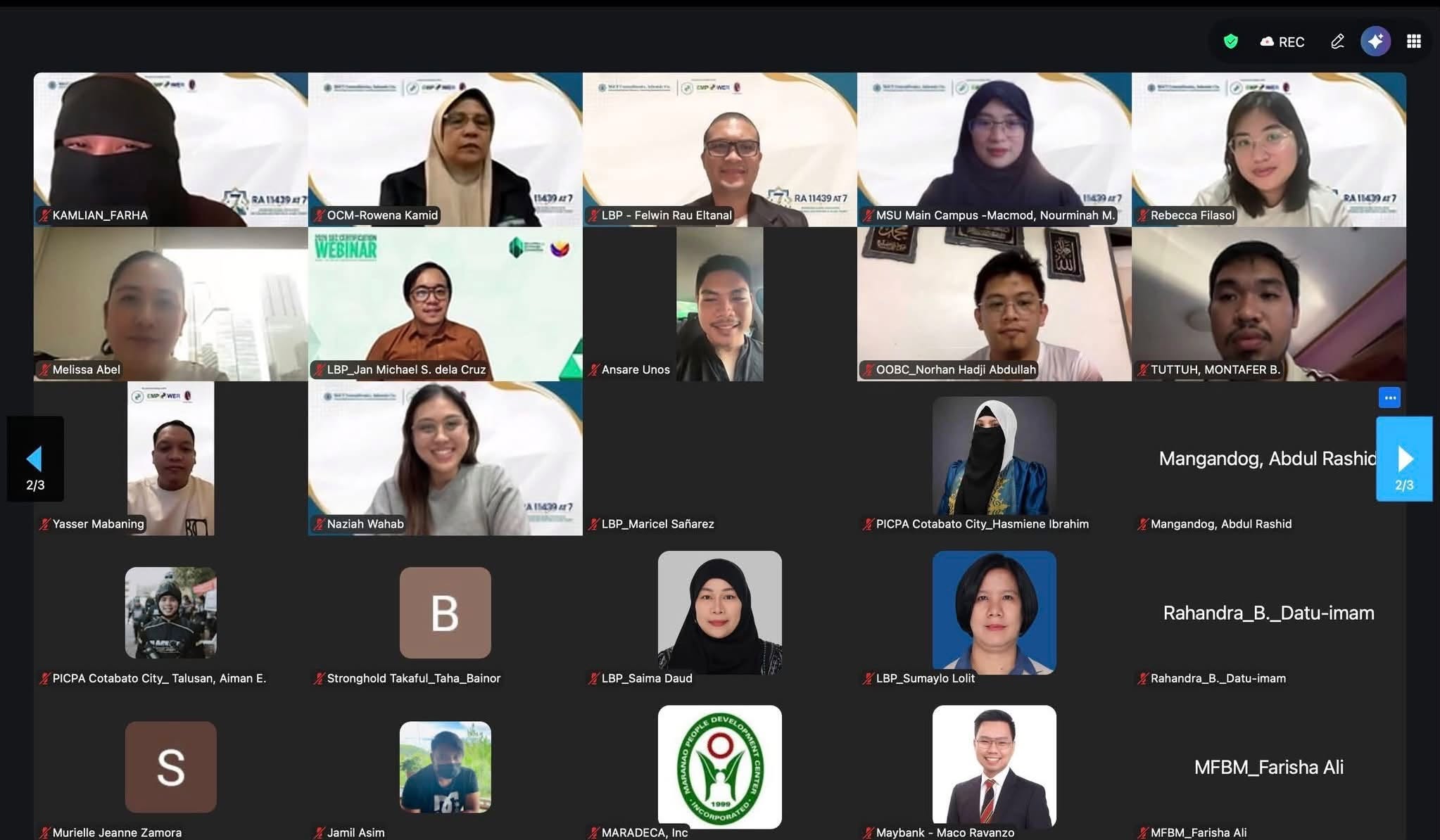
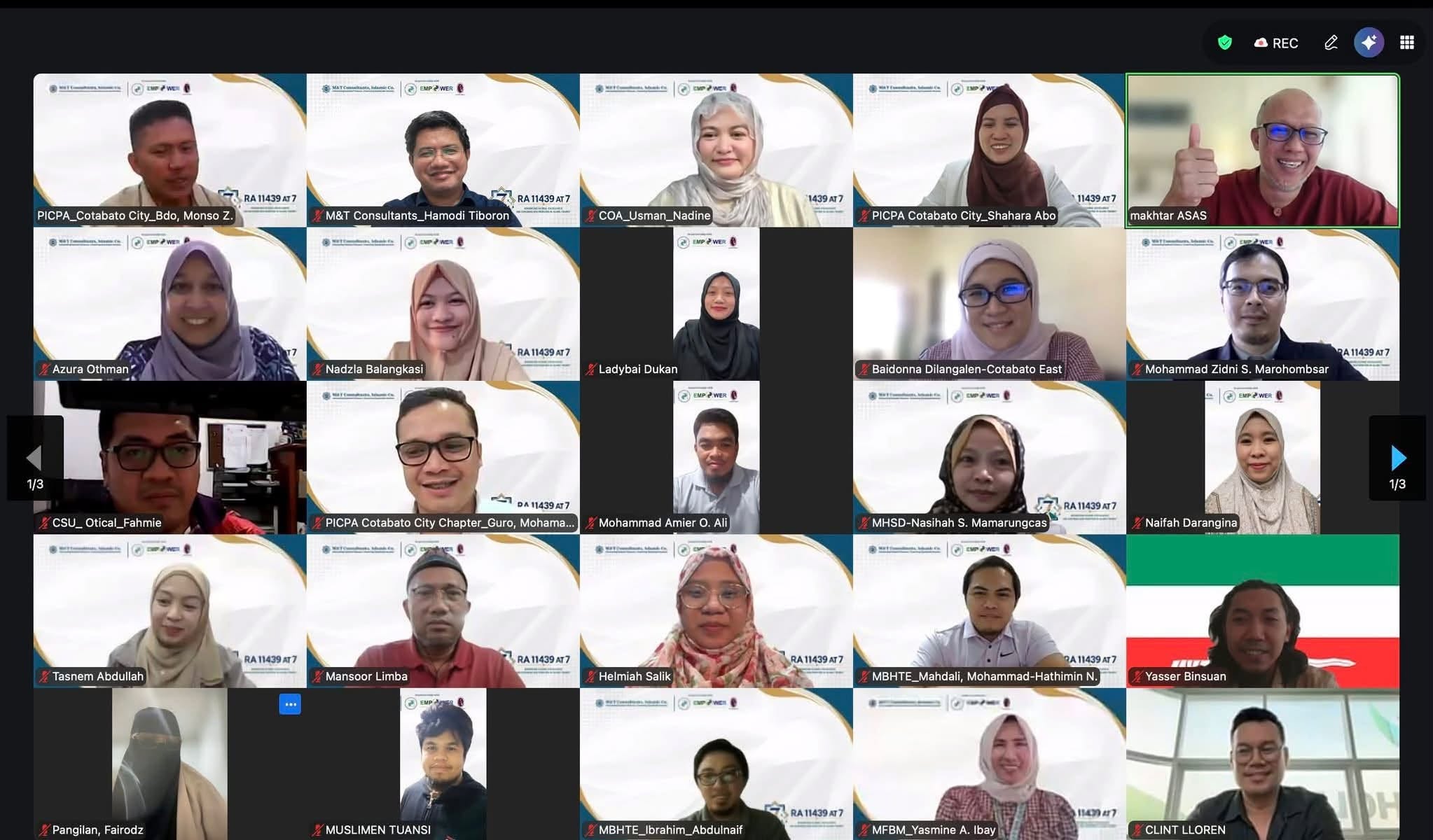
Regulators, government institutions, financial industry players, development partners, professional organizations, academe, civil society, and practitioners gathered online today for “RA 11439 at 7: Advancing Global Excellence and Exploring New Frontiers in Islamic Finance,” a commemorative and technical forum held ahead of the seventh anniversary of Republic Act No. 11439 on August 22, 2026.
Organized by M&T Consultants, Islamic Co., in partnership with the Philippine Institute of Certified Public Accountants – Cotabato City Chapter and the Integrated Bar of the Philippines – Cotabato Chapter, the well-attended forum brought together distinguished guests and knowledge partners from the Bangko Sentral ng Pilipinas (BSP), Securities and Exchange Commission (SEC), Ministry of Finance, and Budget and Management – BARMM (MFBM), Accounting and Auditing Organization for Islamic Financial Institutions (AAOIFI), Association of Shari’ah Advisors in Islamic Finance (ASAS), and the Chartered Institute of Islamic Finance Professionals (CIIF).
Signed into law on August 22, 2019, RA 11439 established an enabling legal framework for the regulation and organization of Islamic banks in the Philippines. Nearly seven years later, the forum provided an opportunity not only to commemorate the legislative milestone, but also to assess the progress of the Philippine Islamic finance ecosystem, examine emerging opportunities, and connect Filipino professionals with regional and global standards and career pathways.
From legislative vision to the people Islamic finance is meant to serve
The first part of the programme was devoted to commemorative messages recognizing the legislative, regulatory, and institutional foundations of Islamic finance development in the country.
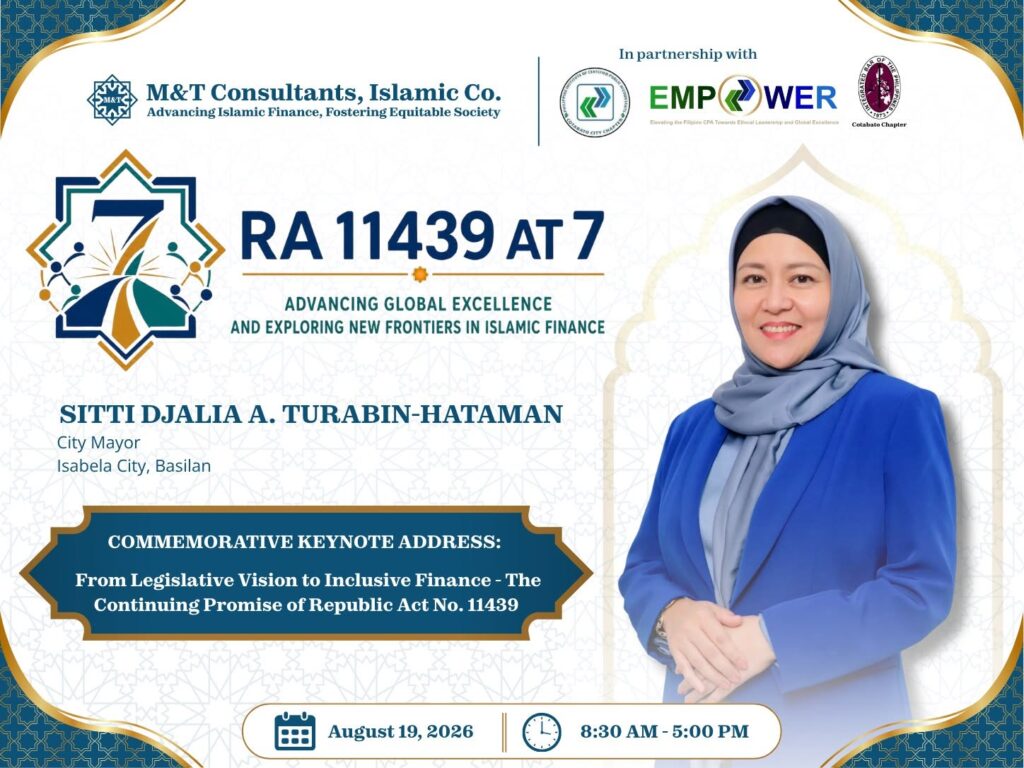
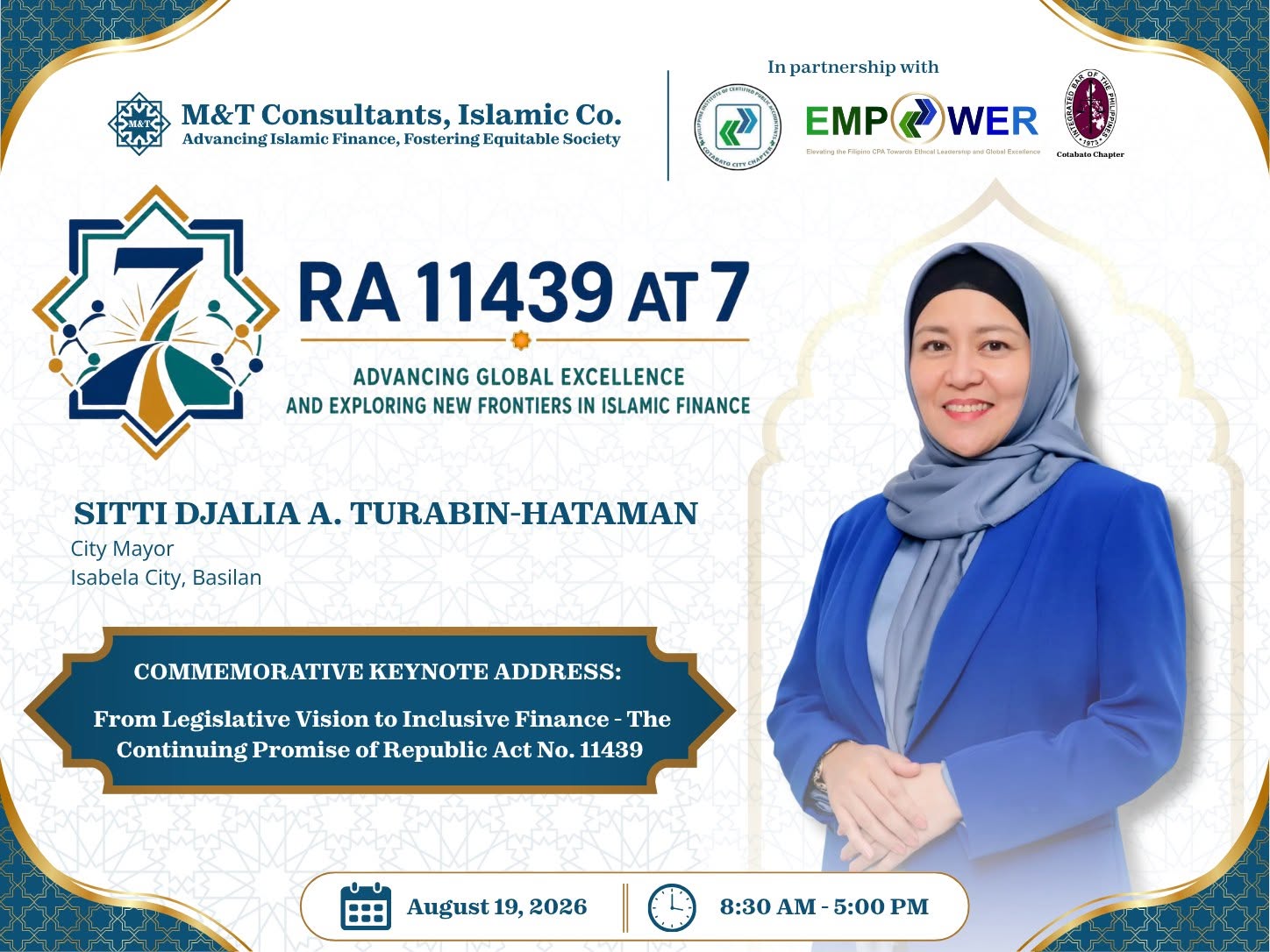
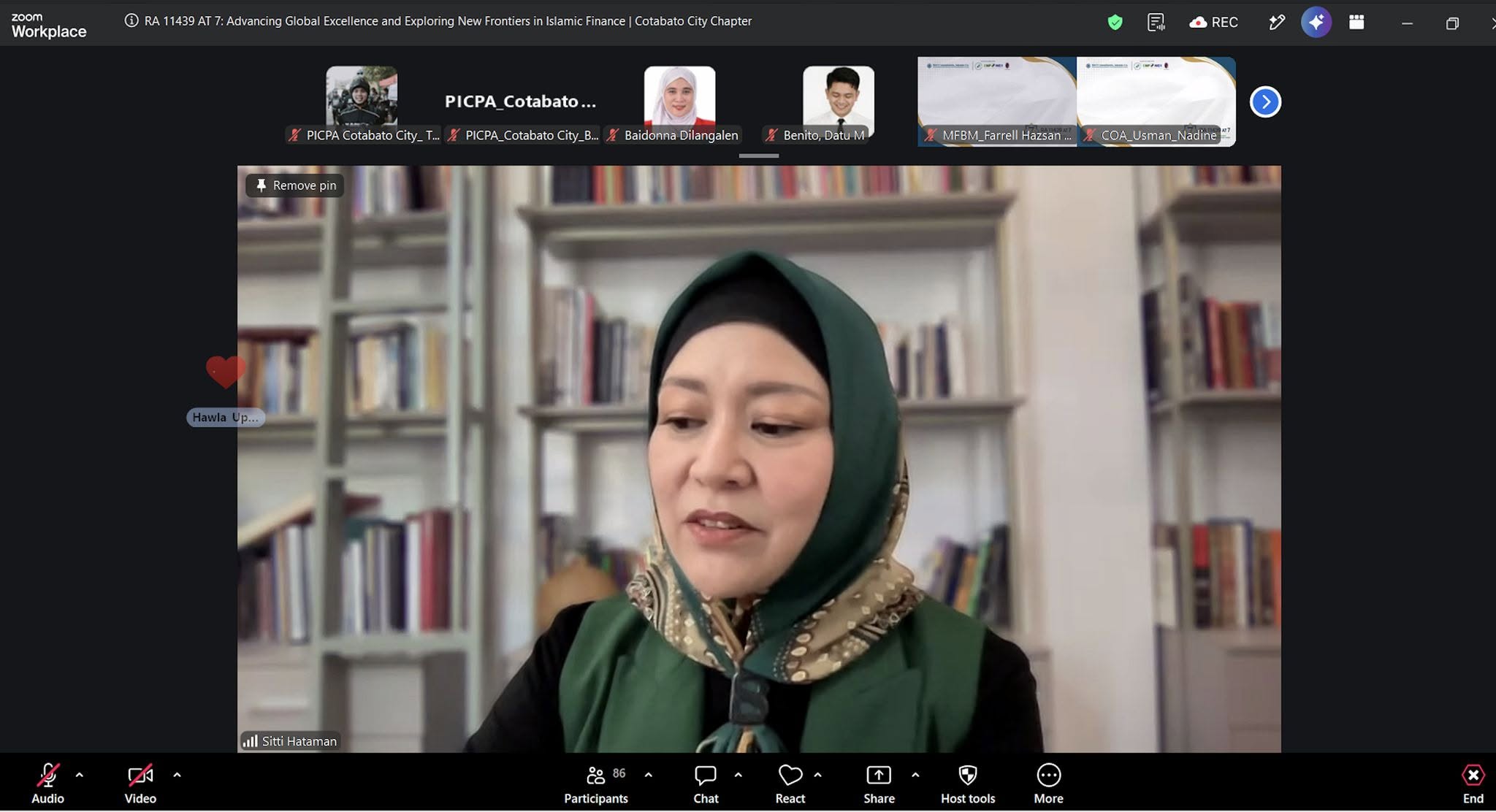
Isabela City Mayor Sitti Djalia A. Turabin-Hataman, whose pioneering legislative work as Congressional Author of the House measure that helped pave the way for Republic Act No. 11439, delivered the Commemorative Keynote Address, titled: “From Legislative Vision to Inclusive Finance – The Continuing Promise of Republic Act No. 11439.”
Her message brought the discussion back to the underlying wisdom of the law: that Islamic finance should not stop at the level of financial institutions, regulatory frameworks, or financial products.
Rather, its promise must ultimately reach the communities, households, entrepreneurs, and ordinary people whom the financial system is intended to serve.
The keynote underscored that the deeper value of Islamic finance lies in its ability to widen financial choices, promote meaningful inclusion, support livelihoods and enterprise, and create economic opportunities for communities that have historically remained underserved.
The message provided an important frame for the entire forum: while institutions and regulations are necessary foundations, the ultimate measure of progress is whether these translate into tangible benefits at the community and household levels.
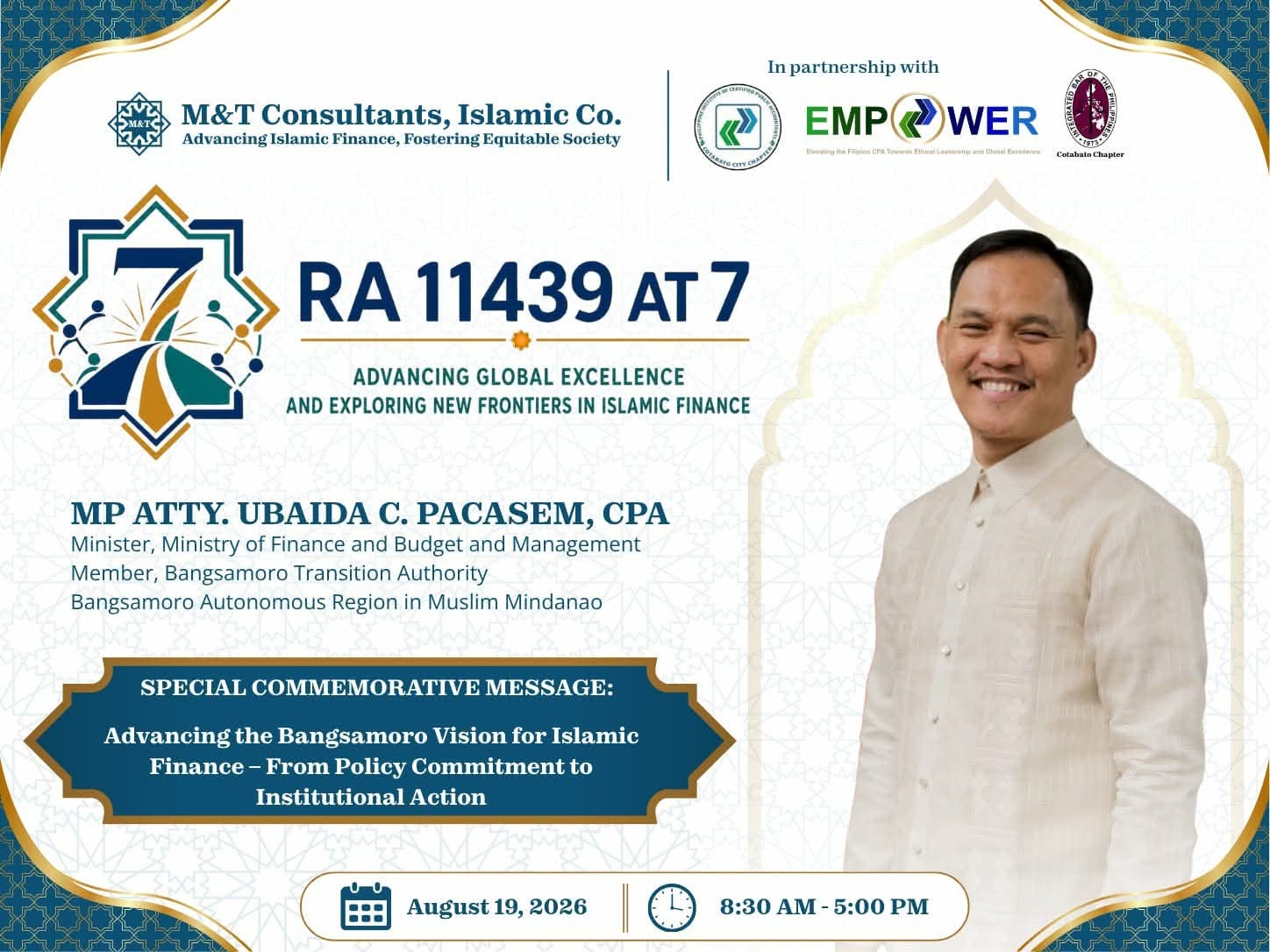
Minister and Member of Parliament Atty. Ubaida C. Pacasem, Minister of Finance, and Budget and Management of the BARMM, also delivered a Special Commemorative Message, highlighting the importance of Islamic finance to the Bangsamoro’s economic and development aspirations.
His message reinforced the need to move from policy direction toward a functional ecosystem—one supported by strong institutions, appropriate professional capacity, partnerships, and financial solutions that can respond to the needs of the Bangsamoro people while opening wider opportunities for regional economic participation.
The commemorative messages connected the legislative vision behind RA 11439 with the continuing work of national regulators, the Bangsamoro Government, industry stakeholders, and other institutions now carrying the Islamic finance agenda forward.
BSP highlights whole-of-government approach to Islamic finance development
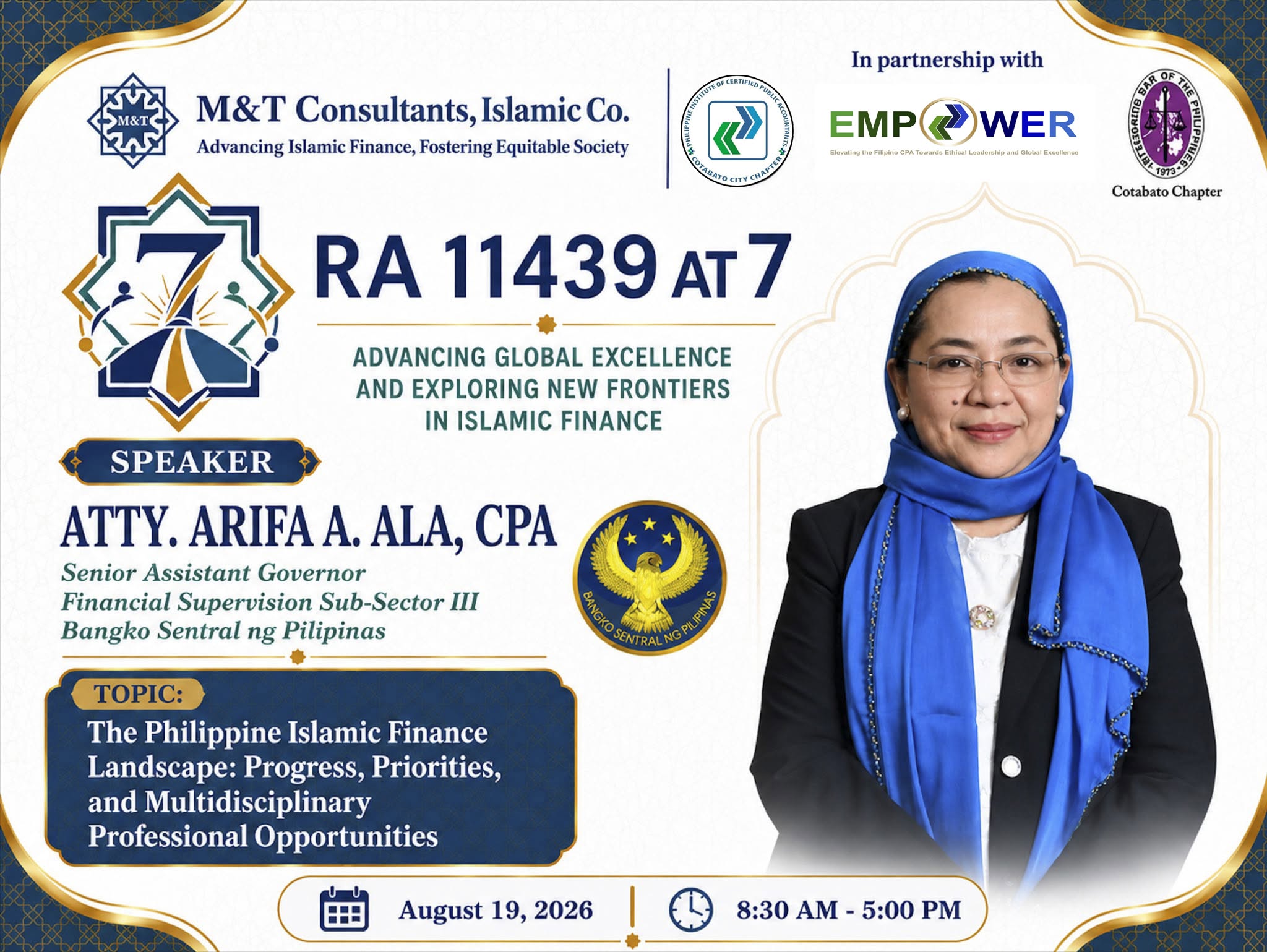
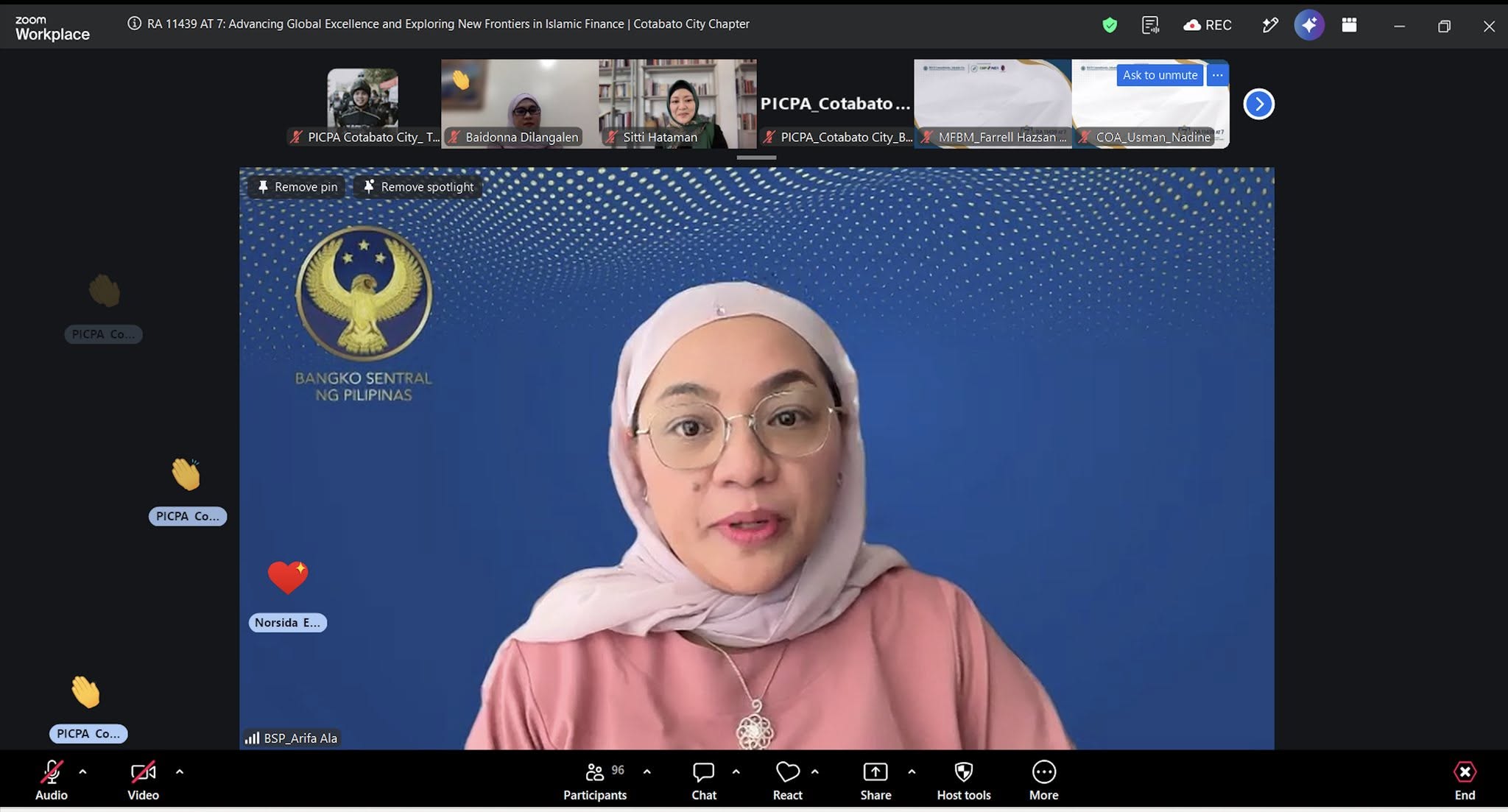
The morning technical discussions turned to the Philippine Islamic finance landscape, with Atty. Arifa A. Ala, CPA, Senior Assistant Governor of the Bangko Sentral ng Pilipinas, presenting the country’s progress, priorities, and emerging multidisciplinary professional opportunities.
A major theme of the discussion was the whole-of-government approach being led by the BSP through the Islamic Finance Coordination Forum (IFCF). The approach recognizes that developing Islamic finance requires more than banking regulation alone. A functioning ecosystem needs coordinated action across regulatory, legal, taxation, institutional, market-development, capacity-building, and other policy areas, as well as continuing engagement with financial institutions, professional groups, businesses, Shari’ah practitioners, and other stakeholders.
The session highlighted how the Philippine Islamic finance agenda has increasingly shifted from creating an enabling environment toward strengthening actual market participation, institutional readiness, professional competencies, and sustainable implementation. It likewise pointed to expanding roles for professionals across accounting, auditing, law, compliance, risk management, finance, governance, and other disciplines as the market develops.
SEC discusses emerging Sukuk and Islamic capital market opportunities
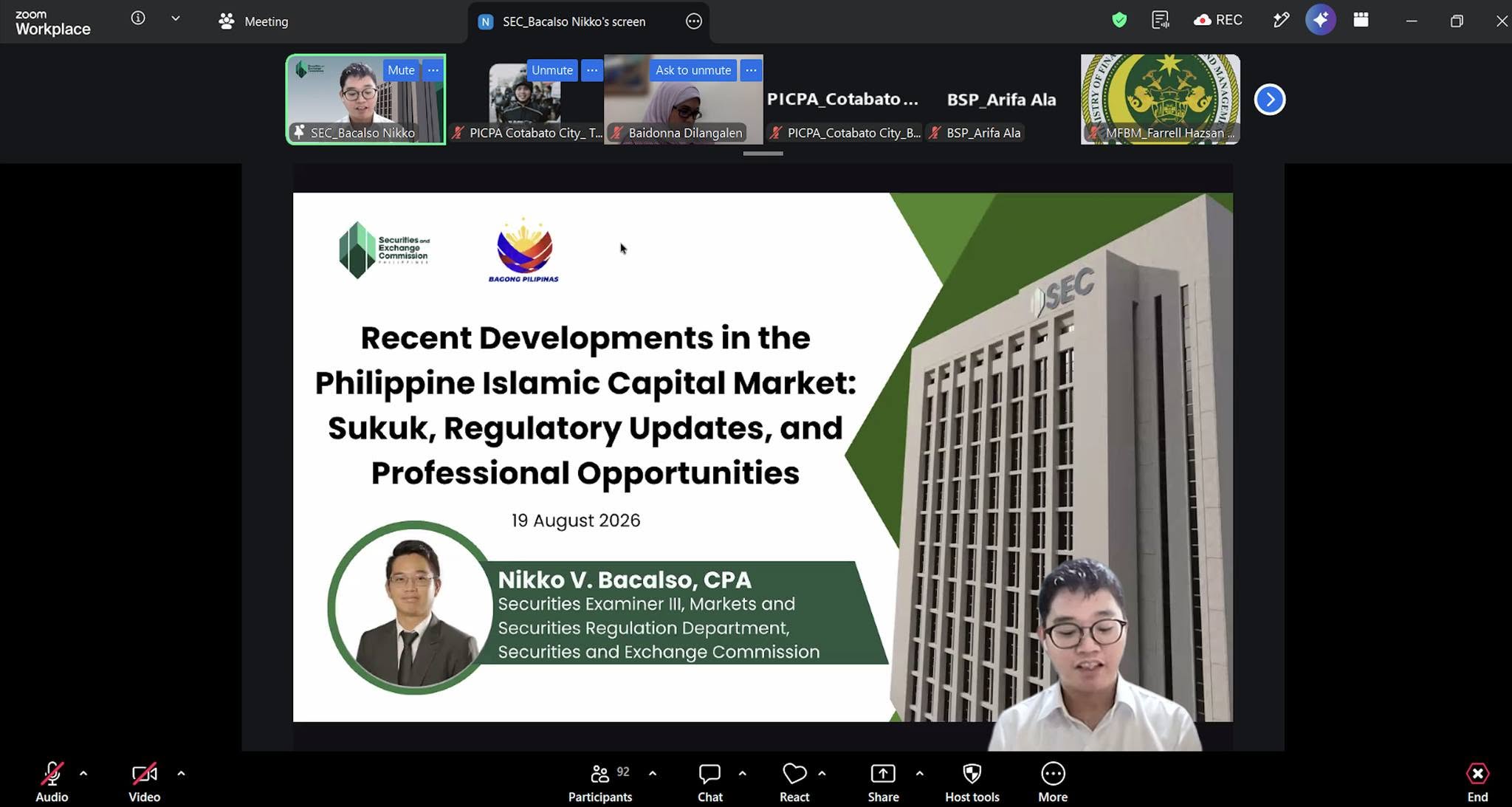
The morning programme also featured the Securities and Exchange Commission, represented by Nikko V. Bacalso, CPA, who discussed recent developments in the Philippine Islamic capital market, including Sukuk, regulatory developments, and emerging professional opportunities. The session broadened the Islamic finance conversation beyond banking by examining how Sukuk and other Islamic capital market instruments can potentially create additional channels for mobilizing financing and investment.
For Philippine businesses, institutions, and other eligible market participants, the development of the Islamic capital market can open alternative mechanisms for raising capital and financing development and enterprise activities. It also creates emerging areas of professional practice for accountants, auditors, lawyers, compliance officers, finance practitioners, securities professionals, and advisers who may wish to develop specialization in Islamic finance.
BARMM Islamic Finance Roadmap moves the discussion toward implementation
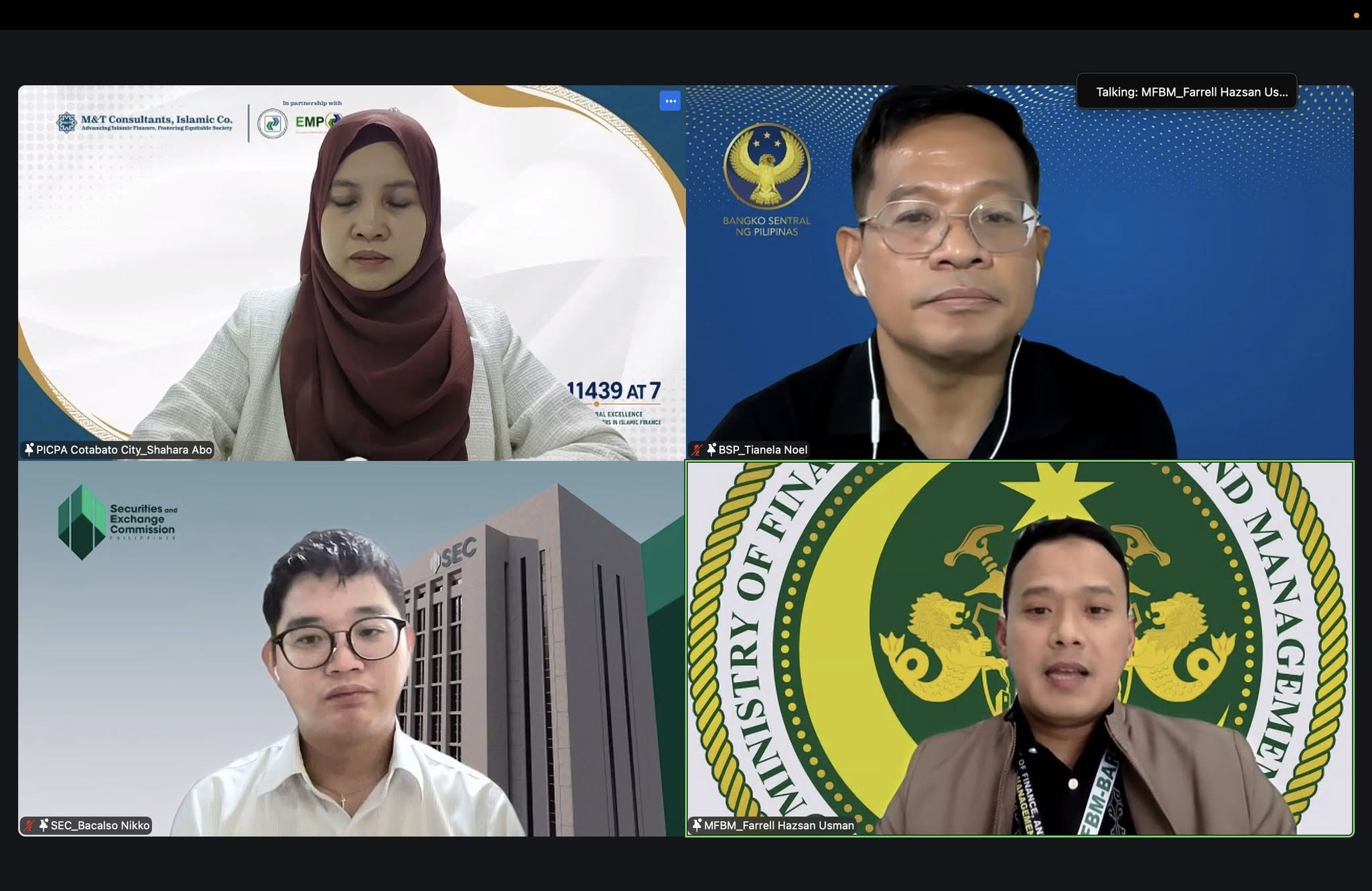
Following the national landscape presentation, Farrel Hazsan Usman discussed the BARMM Islamic Finance Roadmap, bringing the Bangsamoro perspective into the conversation. The presentation focused on how the Roadmap can be translated from strategic direction into concrete institutional and economic outcomes. This includes strengthening the necessary governance mechanisms, professional and technical capacity, partnerships, financial products, and enabling systems needed to build a more functional Islamic finance ecosystem within BARMM.
The discussion also situated the Roadmap within the Bangsamoro’s broader economic direction, including its strengthening engagement with Mindanao and BIMP-EAGA. As BARMM seeks deeper participation in regional trade, investment, enterprise development, and economic cooperation, Islamic finance can potentially serve as an additional platform for connecting the region with wider ASEAN and international markets.
The presentation highlighted that the next stage of the BARMM journey will increasingly depend on translating the Roadmap into practical opportunities accessible to financial institutions, businesses, professionals, entrepreneurs, and communities.
Afternoon sessions connect Philippine professionals with global standards and competencies
The afternoon programme shifted from Philippine market development toward the “Advancing Global Excellence” dimension of the commemorative theme, focusing on global standards, Shari’ah governance, professional competencies, qualifications, and international career pathways.
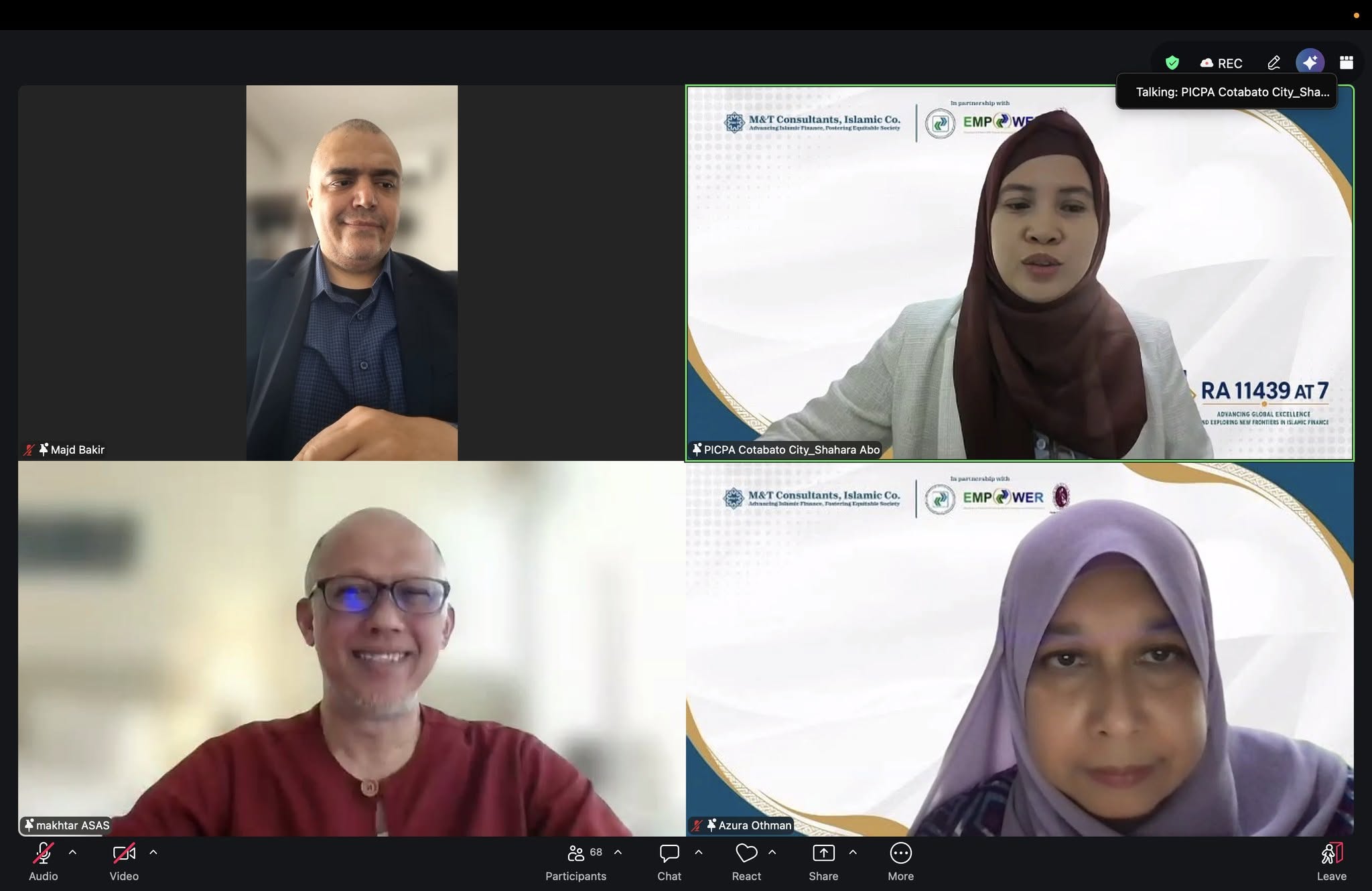
The Accounting and Auditing Organization for Islamic Financial Institutions (AAOIFI) was represented by Mohammad Majd Bakir, Director of Professional Standards Development, who shared perspectives on global standards and the competencies increasingly relevant to accounting, auditing, assurance, governance, and other professional disciplines supporting Islamic finance. AAOIFI’s participation brought the perspective of a leading global standard-setting institution directly into the Philippine conversation, helping participants better understand how international Islamic finance standards intersect with emerging professional practice in the country.
The session emphasized the importance of preparing professionals who are not only technically competent in their existing disciplines, but are also able to understand the distinctive structures, governance requirements, and standards applicable to Islamic financial transactions and institutions.
The Association of Shari’ah Advisors in Islamic Finance (ASAS), represented by its Chief Executive Officer Hadji Makhtar Abdullah, discussed Shari’ah governance and emerging opportunities in legal, advisory, compliance, and assurance practice.
The session highlighted the increasingly multidisciplinary character of Islamic finance, where effective Shari’ah governance requires professionals capable of connecting Shari’ah principles with legal documentation, institutional policies, financial structures, compliance systems, risk management, and assurance practices.
The Chartered Institute of Islamic Finance Professionals (CIIF), through Chief Executive Officer Dr. Azura Othman, completed the global professional perspective with a discussion on competencies and qualification pathways for accountants, auditors, lawyers, finance practitioners, and other professionals seeking to build careers in Islamic finance.
The discussion reinforced a central message of the forum: professionals do not necessarily need to leave their existing disciplines to enter Islamic finance. Instead, their current expertise can become an entry point when complemented by specialized Islamic finance knowledge, relevant qualifications, exposure to international standards, and stronger professional networks.
For Filipino professionals, these pathways are not limited to the emerging domestic market. They can also create opportunities for participation across ASEAN and the wider global Islamic finance industry.
A growing ecosystem of public, private and professional stakeholders
The strong attendance at the forum reflected the growing breadth of interest in Islamic finance in the Philippines. Participants came from national and Bangsamoro government institutions, banking and financial services, fintech, insurance, development organizations, professional and legal associations, universities, Shari’ah institutions, civil society, and other sectors.
For M&T Consultants, Islamic Co., the diversity of participation reinforced a principle that has guided its work in Islamic finance: the sector cannot be developed by one institution, regulator, profession, or segment of government alone. It requires an ecosystem. It has sought to contribute to this ecosystem through advisory work, capacity development, research and policy support, Shari’ah-related services, and partnerships linking Philippine institutions and professionals with the wider Islamic finance industry.
From legislation to implementation, and from institutions to communities
As RA 11439 approaches its seventh anniversary on August 22, the forum showed how the Philippine Islamic finance conversation has evolved. The journey is increasingly moving from legislation to implementation, from individual institutions toward ecosystem building, and from domestic development toward ASEAN and global engagement. Yet the keynote message served as an important reminder that these developments must ultimately remain connected to the people the financial system is meant to serve.
The success of Islamic finance will not be measured only by the number of institutions established, products introduced, standards adopted, or professionals certified. Its deeper value will be seen in whether these efforts translate into real financial choices, stronger enterprises, livelihood opportunities, investments, and greater economic participation for communities, households, and ordinary Filipinos.
As emphasized throughout RA 11439 at 7, advancing global excellence and exploring new frontiers in Islamic finance must ultimately go hand in hand with inclusion, ensuring that the promise of the law reaches from institutions all the way to the communities and people it was intended to serve.
#IslamicFinancePh #RA11439at7
#AdvancingGlobalExcellence #IFCF
#BSP #SEC #MFBM #AAOIFI #ASAS
#CIIF #MnTPh
#AdvancingIslamicFinance
#FosteringEquitableSociety