
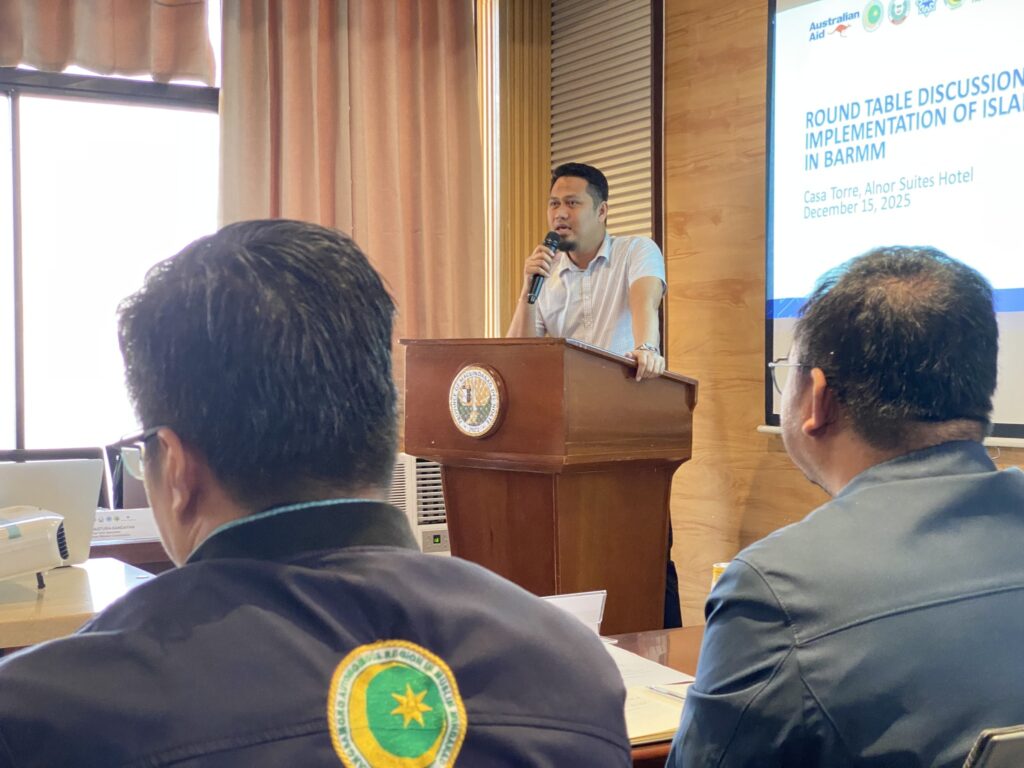
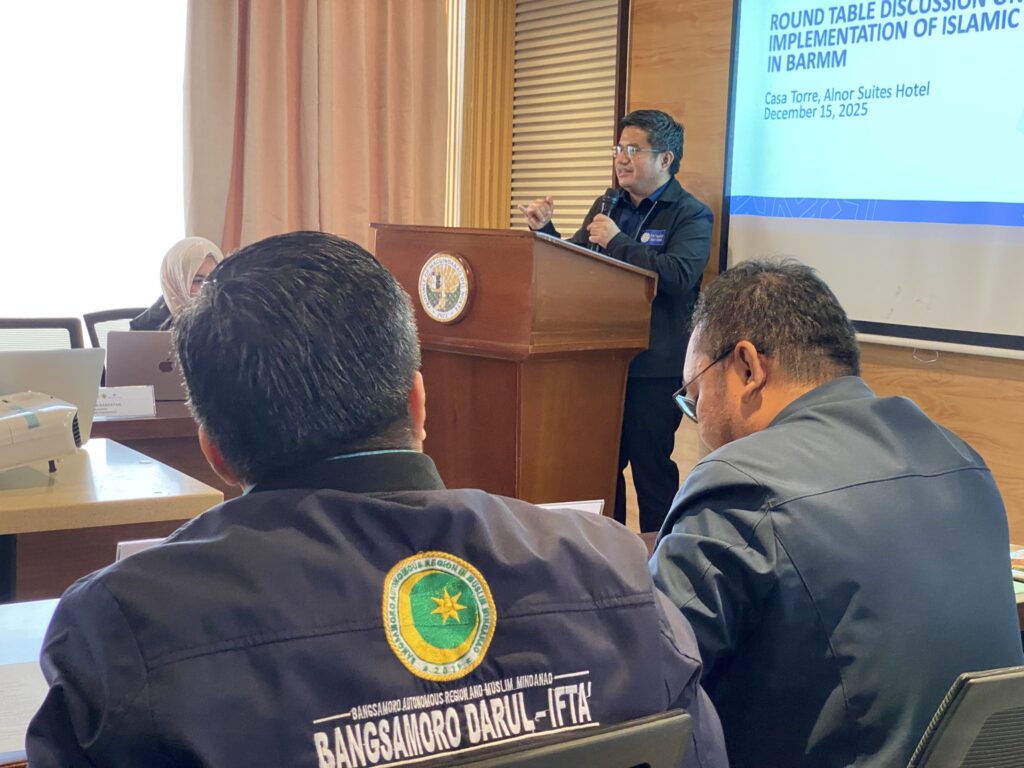
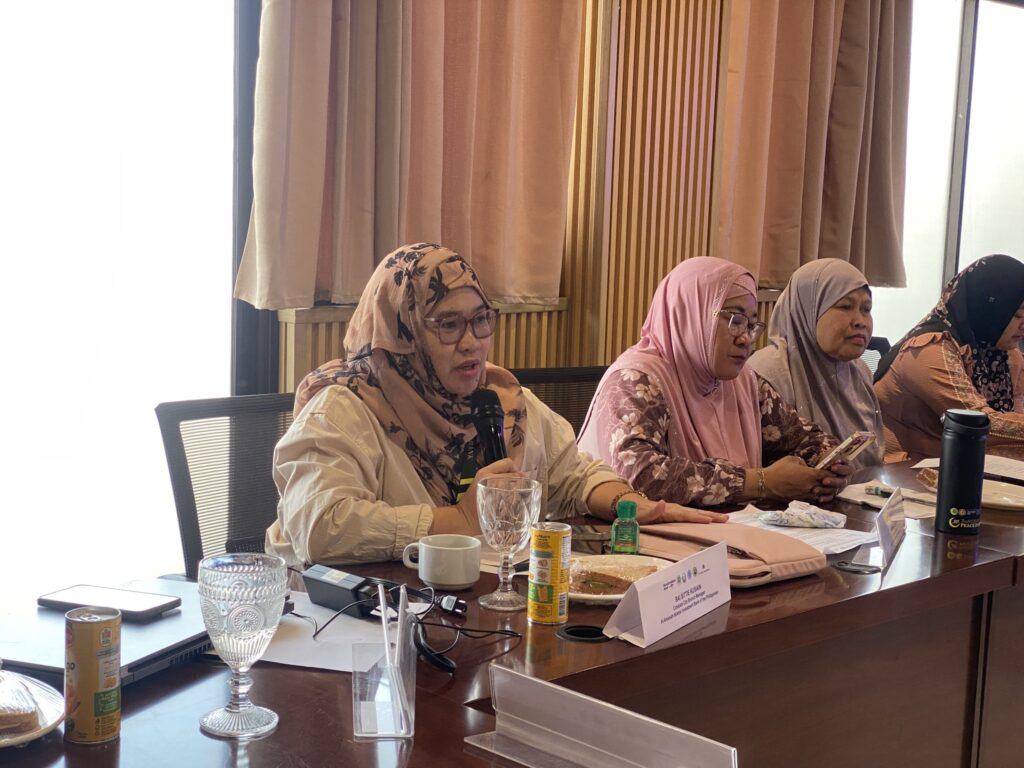
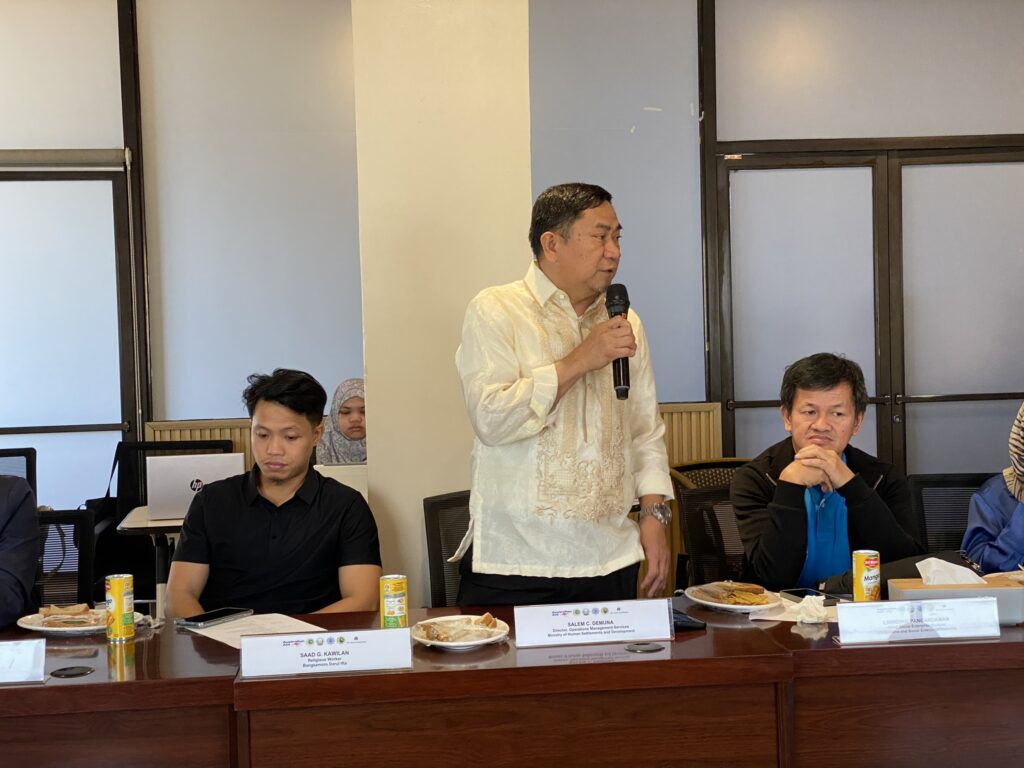
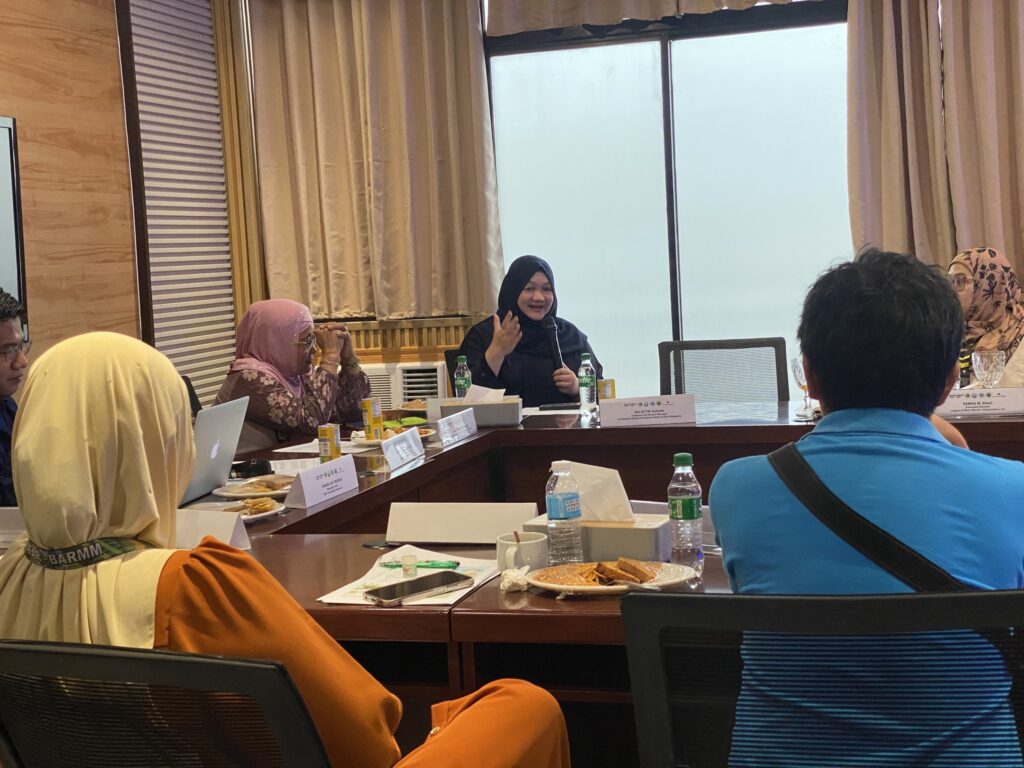
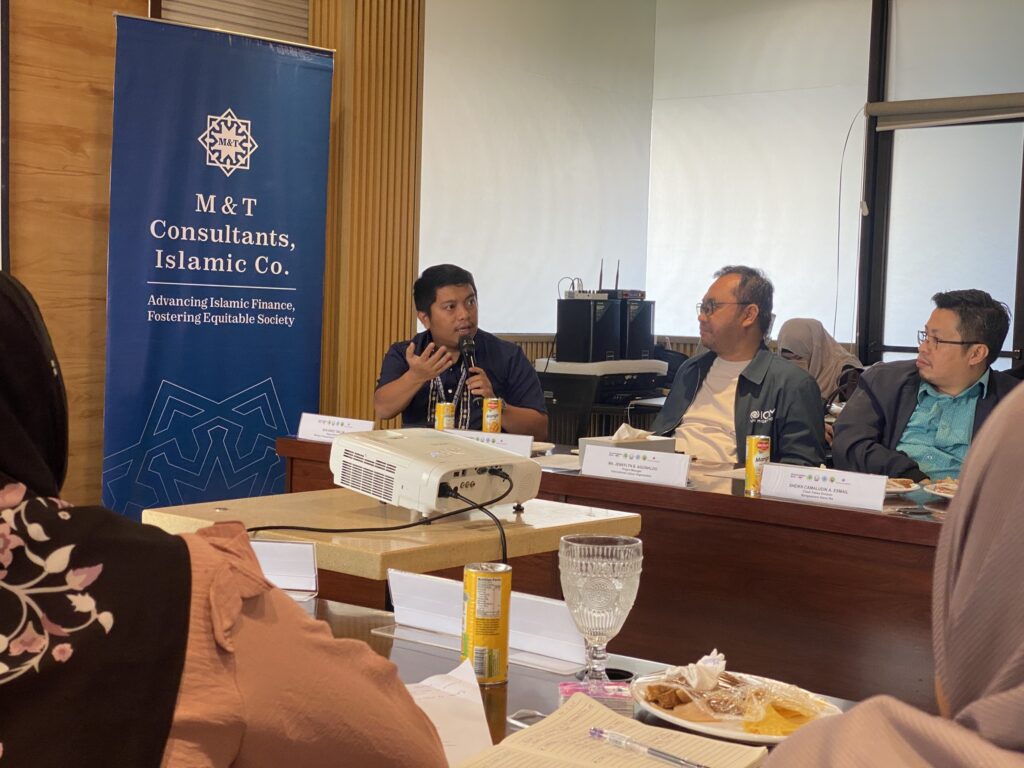
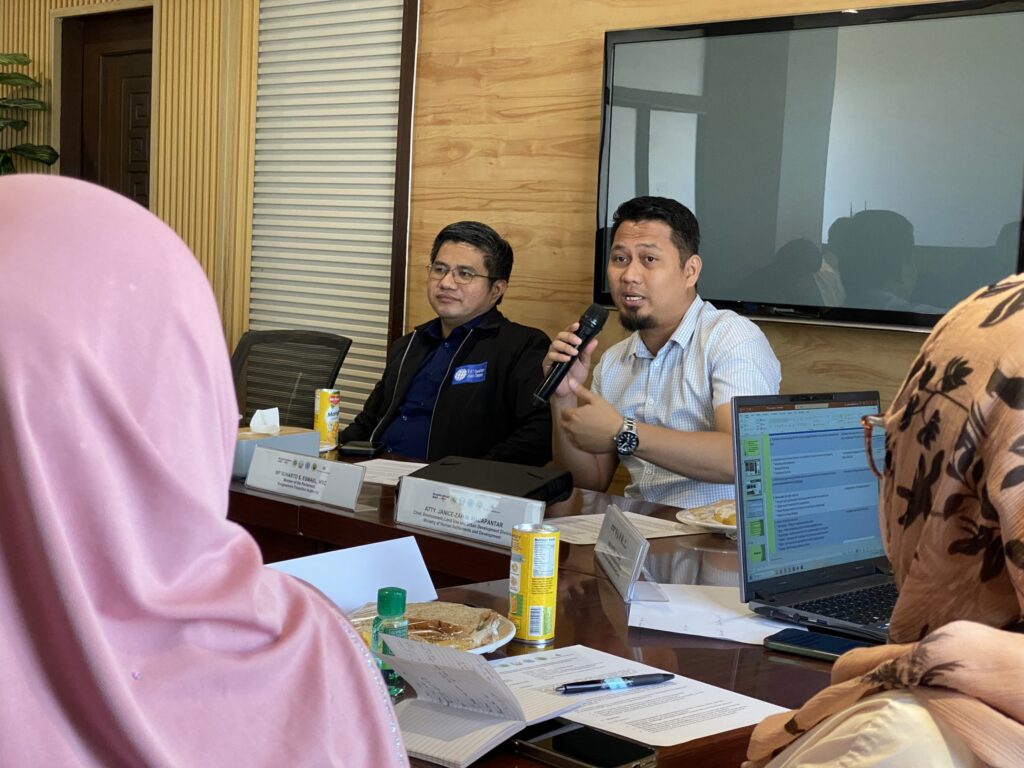
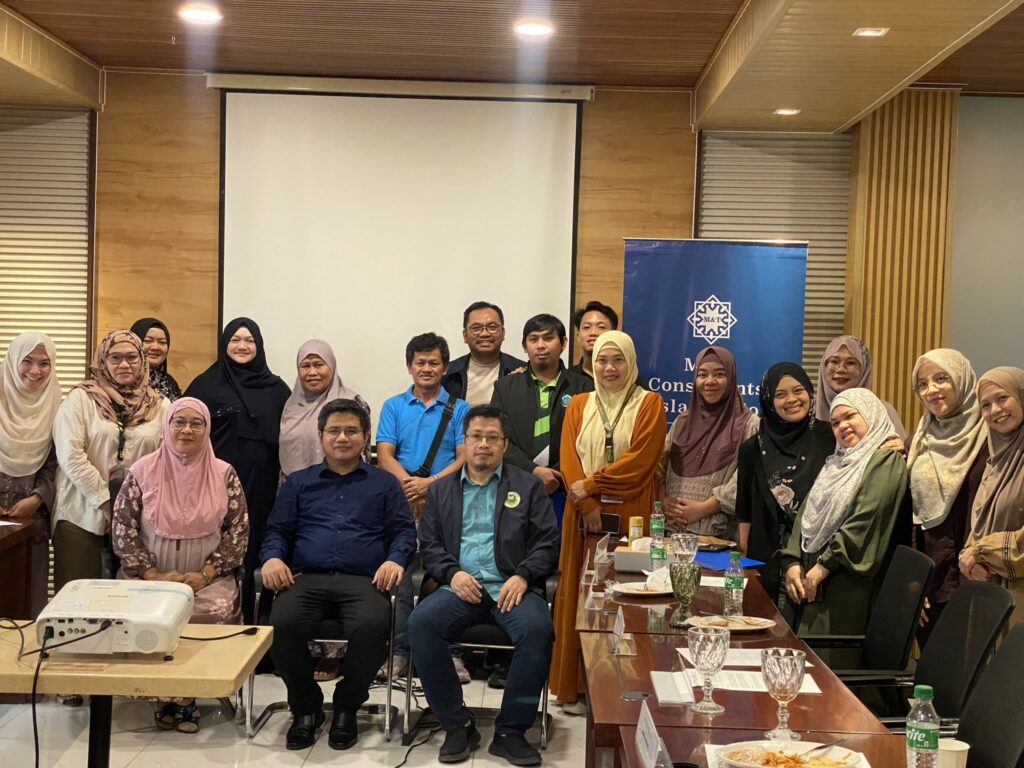
Cotabato City — A Round Table Discussion (RTD) on the Status of Implementation of Islamic Finance in the Bangsamoro Autonomous Region in Muslim Mindanao (BARMM) was successfully convened on December 15, 2025, at Casa Torre, Alnor Suites Hotel, Cotabato City. The RTD was organized by M&T Consultants and Islamic Co., in partnership with the League of Moro Women Organization, Inc. (LMWOI), with support from the Australian Government’s Department of Foreign Affairs and Trade (DFAT) and The Asia Foundation (TAF) under the Accelerate Bangsamoro Program. The activity was conducted in coordination with the Office of Member of Parliament Suharto Esmael of the Bangsamoro Transition Authority (BTA).
The event gathered representatives from various BARMM ministries, offices, and agencies, Islamic financial institutions, development partners, and non-government organizations. The strong multi-stakeholder participation reflected a growing collective commitment to advancing Islamic finance as a key pillar for inclusive growth, peacebuilding, and socio-economic development in the Bangsamoro and the Philippines.
The RTD provided a platform to assess the current status of Islamic finance implementation in BARMM, identify policy and operational gaps, and explore opportunities to strengthen the overall Islamic finance ecosystem. Discussions covered major sectors including Islamic banking, takaful (Islamic insurance), Islamic capital markets, Islamic social finance, and sector-specific financing applications.
A key highlight of the discussion was the presentation of lessons learned from the Shariah-compliant Women Empowerment Facility being pilot-tested by LMWOI. LMWOI, led by its Executive Director Samra Ebad, is an organization composed of former BIWAB (Bangsamoro Islamic Women Auxiliary Brigade) of the Moro Islamic Liberation Front (MILF). Ms. Ebad shared early outcomes, operational insights, and challenges from implementing a Shariah-compliant financing facility designed to support former women combatants and conflict-affected women through livelihood and microenterprise development.
The facility was recognized as a promising Islamic social finance model that integrates women’s economic empowerment, social reintegration, and peacebuilding, while remaining faithful to Islamic financial principles. Participants underscored the importance of institutional support, partnerships with Islamic financial institutions, and policy backing to sustain and scale up the initiative.
Complementing the MILF-side initiatives, the RTD also highlighted efforts on the Moro National Liberation Front (MNLF) side. Deputy Minister Nurainee Tan Lim of the Ministry of Social Services and Development (MSSD) in her capacity within the MNLF and as Vice Chair of the BARMM Women Advisory Council, shared ongoing initiatives to establish a database of women entrepreneurs who have already established businesses and demonstrated the capacity to participate in available Islamic microfinance programs. The database is envisioned as a practical tool to facilitate targeted financial inclusion by linking qualified women entrepreneurs to Islamic microfinance providers, development programs, and capacity-building opportunities across the region.
Sectoral updates from BARMM institutions further enriched the discussion. The Bangsamoro Darul Ifta shared that the institutionalization of zakat and awqaf is included in its pipeline for the coming year, marking a significant step toward strengthening Islamic social finance mechanisms in BARMM. These initiatives are expected to enhance resource mobilization for social protection, poverty reduction, and community development.
Islamic financial institutions likewise provided updates on their expanding role in the region. Amanah Islamic Bank and Islamic Card Bank shared their continuing efforts to expand operations and broaden access to Shariah-compliant financial products in BARMM. Amanah Islamic Bank also discussed its partnership with the Ministry of Trade, Investments and Tourism (MTIT) for the implementation of the PESO (Propelling Economic and Sustainable Opportunities) Program, which aims to support micro, small, and medium enterprises by facilitating access to Shariah-compliant financing, business development services, and market opportunities.
The Ministry of Human Settlements and Development (MHSD) presented the prospects for Islamic housing finance as a viable option to address housing needs in BARMM, while the Ministry of Agriculture, Fisheries, and Agrarian Reform (MAFAR) shared information on MAFARLends, an initiative designed to support farmers and fisherfolk through accessible and Shariah-compliant financing.
Across the discussions, participants noted the growing interest among development partners in supporting Islamic finance initiatives in BARMM, particularly those that demonstrate strong linkages to peacebuilding, women’s economic empowerment, and inclusive economic growth.
The outcomes of the RTD will inform the planned scaling up of the Shariah-compliant Women Empowerment Facility to continually support former women combatants under LMWOI. The results will also contribute to policy formulation and program development aimed at creating an enabling environment for Islamic finance across sectors, including Islamic banking, takaful, Islamic capital markets, and Islamic social finance. More broadly, the discussions are expected to feed into national and regional initiatives that contribute to strengthening the Islamic finance ecosystem in the Philippines.
The RTD concluded with a shared commitment among stakeholders to sustain collaboration, deepen policy engagement, and advance practical initiatives that position Islamic finance as a transformative tool for development, financial inclusion, and lasting peace in the Bangsamoro.